Call Us
+86-13503272331
Call Us
+86-13503272331

For environments with frequent water exposure, washdown, oil, condensation, or outdoor weather, properly rated liquid tight flexible conduit is generally the safer choice because the complete conduit-and-fitting system is designed to restrict liquid ingress. For applications where the main concerns are corrosion, abrasion, moderate moisture, and mechanical protection, GI flexible conduit with a PVC coating can provide an effective and economical solution.
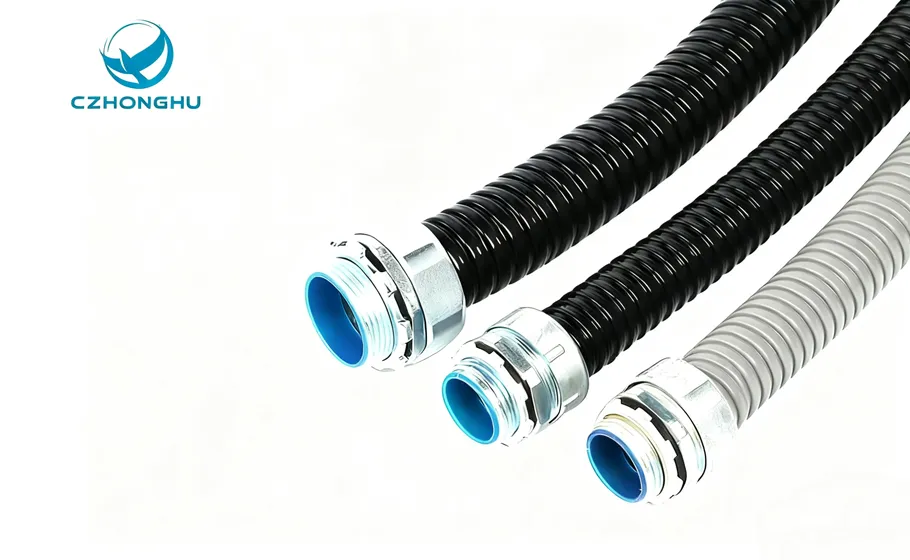
However, these products can overlap. Many liquidtight flexible metal conduits use a galvanized steel core with a flexible PVC jacket—the same basic construction associated with GI PVC coated flexible conduit. The real difference is therefore not simply "PVC coated versus liquid tight," but the conduit construction, jacket formulation, connectors, sealing performance, and applicable certification.
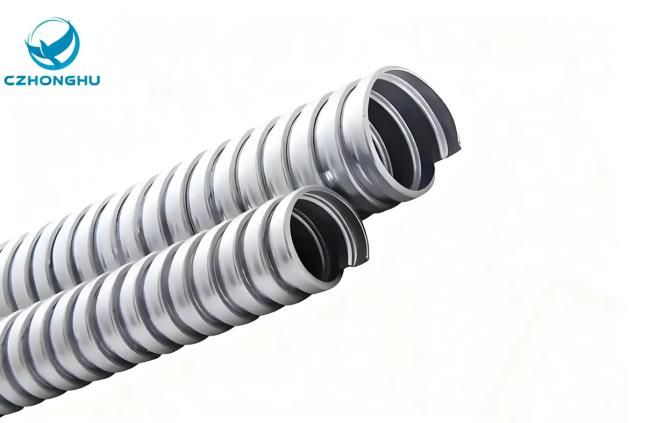
A typical GI PVC coated flexible conduit combines a galvanized steel flexible core with an external PVC layer. The metal core provides mechanical strength, while the PVC coating improves resistance to moisture, corrosion, chemicals, and surface abrasion. This construction is widely used around machinery and in industrial or outdoor cable protection.
Liquid tight flexible metal conduit, or LFMC, also commonly combines galvanized steel with a PVC jacket. Its key advantage is that it is engineered as part of a liquid-resistant wiring system, using compatible liquidtight connectors to protect termination points. Commercial LFMC products are available for wet, oily, UV-exposed, and other demanding environments.
| Factor | PVC Coated GI Flexible Conduit | Liquid Tight Flexible Conduit |
| Mechanical protection | Good | Good to excellent |
| General corrosion resistance | Good | Good to excellent |
| Frequent water exposure | Product-dependent | Preferred |
| Oil/chemical exposure | Depends on PVC formulation | Specialized grades available |
| Sealed connections | Not always | Core system feature |
| Typical use | Machinery, cable routing, outdoor protection | HVAC, pumps, washdown areas, wet industrial locations |
For continuous moisture or frequent splashing, liquid tight conduit has the advantage. The jacket alone is not enough—the fittings are critical because connectors and terminations are common points of water entry. Liquidtight connectors may incorporate seals or gaskets specifically designed for wet and oily environments.
For corrosion protection, high-quality GI flexible conduit with PVC coated construction performs well because the galvanized steel core and PVC outer jacket create two levels of protection. PVC-coated metal conduit is also available with resistance to acids, alkalis, and other chemicals.
Chemical resistance should nevertheless be checked against the actual substance involved. Oils, cleaning agents, acids, salt spray, and industrial chemicals do not affect every PVC formulation equally.
Both conduit types are suitable where machinery vibration, equipment movement, or difficult routing makes rigid conduit impractical.
PVC-coated GI flexible conduit offers a useful balance between bendability and steel mechanical protection, making it suitable for machine tools, control panels, production equipment, and complex cable routes.
Liquid tight conduit provides similar flexibility but requires more attention to the complete installation system. Correct connector selection, bend radius, support, termination, and sealing are essential if the installation is expected to maintain its liquid-resistant performance.
For highly demanding installations, buyers should therefore compare specifications rather than selecting conduit by appearance alone.
The best choice depends on the environmental risk.
Choose PVC coated GI flexible conduit when the installation needs:
Strong mechanical cable protection
Resistance to corrosion and abrasion
Flexible routing around machinery
Protection from moderate moisture or environmental exposure
A cost-effective solution for general industrial applications
Choose liquid tight flexible conduit when wiring is exposed to:
Regular rain or water spray
Condensation and high humidity
Washdown operations
Oils, coolants, or processing fluids
Rooftop HVAC equipment, pumps, motors, or other exposed equipment
Liquidtight products are commonly specified for wet and oily industrial locations, while suitable UV-resistant versions can also be used outdoors.
For either option, outdoor suitability should be verified from the manufacturer's temperature, UV, ingress-protection, and certification data rather than assuming that every PVC-coated conduit provides the same performance.
Not automatically. A PVC jacket improves moisture resistance, but the entire installation—including connectors and terminations—determines whether the system can provide liquidtight protection.
Yes, provided the specific conduit is rated for the intended outdoor conditions. UV resistance, temperature range, water exposure, corrosion level, and connector type should all be considered. Liquidtight products are widely available for wet and outdoor applications.
It can be, but the jacket material must be compatible with the chemicals present. Some liquidtight PVC jackets are specifically formulated to resist oils, mild acids, corrosive fumes, and industrial fluids.
For environments dominated by water, oil, washdown, or frequent liquid exposure, choose a properly rated liquid tight system. Where the main requirements are mechanical protection, corrosion resistance, flexibility, and occasional moisture exposure, a high-quality GI PVC coated flexible conduit may provide better cost-performance.
For industrial projects, the most reliable approach is to match the conduit to the actual exposure conditions, required certification, fitting system, operating temperature, and expected service life—not simply the product name.
 English
 português
 Deutsch
 Nederland
 Español
 Polska