Call Us
+86-13503272331
Call Us
+86-13503272331

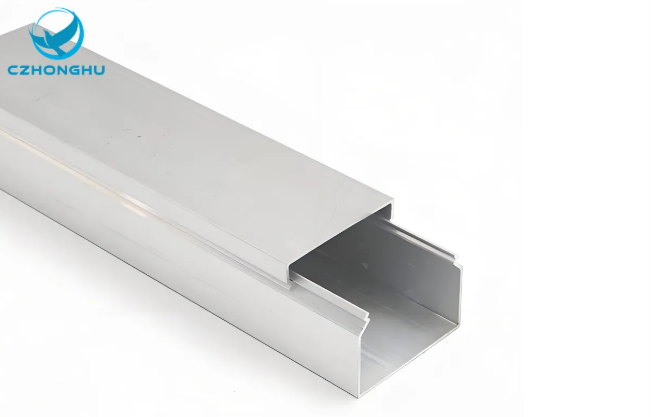
Industrial electrical systems operate under conditions that are far more demanding than typical commercial installations. Continuous vibration, exposure to moisture, chemical vapors, and physical interference all contribute to long-term degradation risks. In these environments, outdoor cable trunking is not simply a cable management accessory—it becomes part of the safety infrastructure.
Unlike exposed wiring or open routing methods, trunking systems create a controlled physical environment for electrical cables, reducing uncertainty in how external stress affects system performance over time.
In harsh industrial environments, most electrical failures do not originate from electrical overload—they originate from physical exposure.
Common real-world failure triggers include:
accidental impact from maintenance equipment
vibration loosening cable supports
abrasion from structural movement
uncontrolled contact with sharp edges or metal surfaces
Outdoor cable trunking reduces these risks by creating a continuous enclosed routing channel, which separates cables from direct environmental interaction.
This containment approach is especially important in facilities where cable routes intersect with human activity or mechanical systems.
One of the most underestimated risks in industrial electrical design is uncontrolled cable routing complexity.
When cables are:
loosely bundled
externally exposed
or routed without defined channels
it becomes difficult to predict where failures may occur.
Outdoor cable trunking introduces predictable routing geometry, which means:
cable paths are clearly defined
inspection zones are structured
stress points are reduced to known locations (joints, bends, entries)
This structured design significantly improves fault tracing efficiency during maintenance operations.
Industrial environments introduce multiple external stressors simultaneously:
water spray or condensation cycles
airborne dust accumulation
oil mist or chemical particles
long-term UV exposure on external installations
The key engineering value of trunking is not just protection—it is environmental separation.
By isolating cables from direct exposure, trunking systems reduce the rate of insulation aging and connector degradation.
For example, in outdoor power distribution systems, moisture ingress is one of the most common contributors to insulation resistance decline over time. Enclosed trunking reduces direct exposure paths, helping maintain more stable electrical performance conditions.
In industrial installations, cable failures are often caused by repeated micro-stress rather than single overload events.
These micro-stresses come from:
vibration from machinery
thermal expansion and contraction cycles
structural movement in mounting frames
Outdoor cable trunking distributes mechanical stress across a fixed structure instead of allowing it to concentrate on individual cables.
This reduces:
localized bending fatigue
connector strain
random disconnection events
In long-term operation, this structural stability contributes more to reliability than the electrical properties of the cable itself.
In industrial operations, maintenance efficiency is directly linked to system design quality.
A well-structured trunking system allows technicians to:
visually trace cable routes quickly
access specific segments without dismantling entire bundles
isolate problem areas more efficiently
This reduces diagnostic time during fault events.
In many industrial maintenance studies, unstructured cabling systems are identified as a major contributor to extended downtime—not because failures happen more often, but because they take longer to locate and repair.
Outdoor cable trunking helps eliminate this uncertainty.
Outdoor industrial systems often experience rapid temperature variation between day and night cycles.
This creates:
expansion and contraction of materials
changes in cable stiffness
shifting mechanical loads on supports
A structured trunking system helps stabilize cable positioning by limiting uncontrolled movement.
This is particularly important in long horizontal runs where thermal movement can accumulate over distance and create stress concentration at endpoints.
In industrial electrical engineering, safety is layered:
Electrical protection (breakers, relays)
Insulation protection (cable quality)
Physical protection (routing system)
Outdoor cable trunking belongs to the third layer, but it indirectly supports the first two by preventing external damage that could trigger electrical faults.
This makes trunking a preventive safety mechanism rather than a reactive one.
Modern industrial facilities are increasingly designed as modular systems rather than isolated installations. Outdoor cable trunking integrates with:
cable tray networks
equipment skids
control panel distribution systems
renewable energy infrastructure layouts
Manufacturers such as EMT Cable Tray design trunking systems that align with modular installation principles, allowing engineers to build scalable cable architectures instead of fixed single-path routing.
This improves both initial installation flexibility and future system expansion capability.
From a lifecycle engineering perspective, the value of outdoor cable trunking is not only in initial protection but in long-term system predictability.
Key lifecycle benefits include:
fewer unexpected mechanical failures
reduced inspection frequency for hidden cable damage
more consistent performance over time
lower risk of cascading electrical faults
In industrial environments where downtime cost is high, predictability is often more valuable than initial cost savings.
In real industrial practice, cable failures rarely occur because of one extreme event. They usually result from a combination of small, repeated stresses that accumulate over time.
Outdoor cable trunking reduces these accumulation effects by:
limiting physical exposure
stabilizing cable geometry
controlling environmental interaction
simplifying maintenance response
It does not eliminate risk entirely—but it significantly reduces uncertainty in how cables behave over long operational cycles.
Outdoor cable trunking improves safety and reliability in harsh industrial environments by controlling physical exposure, stabilizing cable routing, and reducing mechanical stress accumulation over time. Its main value lies not in a single protective function, but in creating a predictable and structured cable environment that simplifies maintenance and reduces long-term failure risk. In industrial systems where downtime and uncertainty are costly, trunking plays a critical role in maintaining operational stability and ensuring consistent electrical performance throughout the system lifecycle.
 English
 português
 Deutsch
 Nederland
 Español
 Polska