Call Us
+86-13503272331
Call Us
+86-13503272331

Selecting the right conduit system is a critical step in electrical design, especially for outdoor and industrial environments where conditions are unpredictable. Engineers and contractors often rely on gi flexible conduit pvc coated systems to handle complex routing while maintaining protection against mechanical and environmental stress.
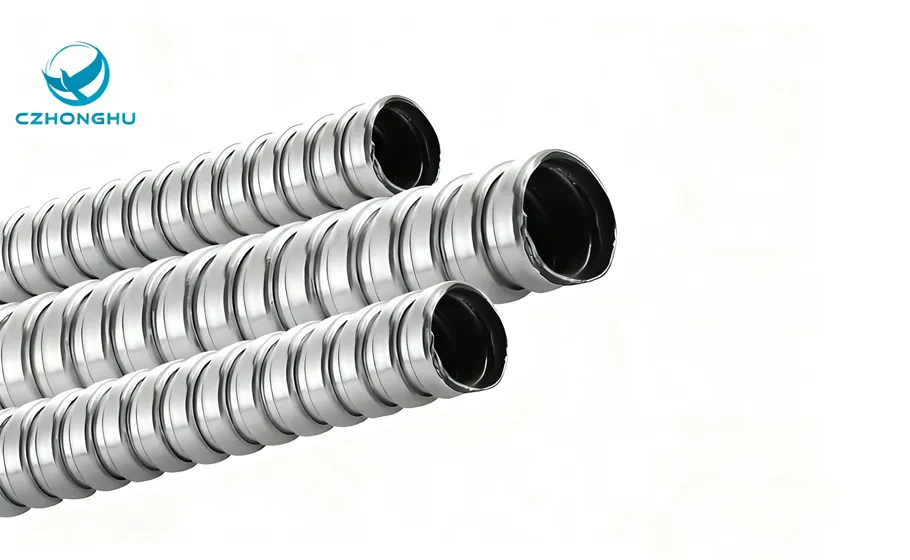
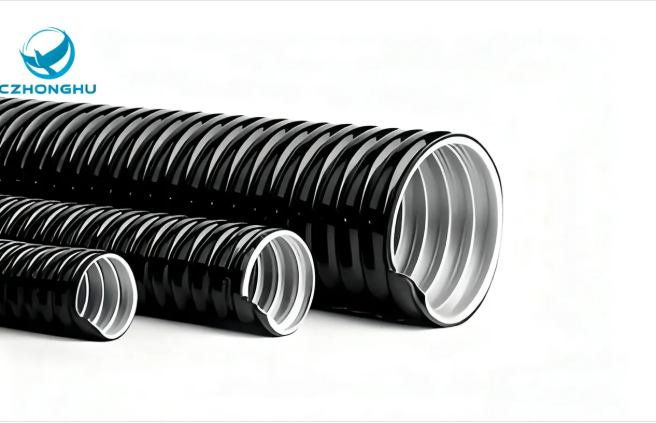
GI flexible conduit PVC coated is a dual-layer cable protection system consisting of a galvanized iron (GI) flexible metal core with an external PVC coating, designed to provide both mechanical strength and environmental resistance in electrical installations.
However, choosing the correct specification involves more than simply selecting a product type. It requires a structured evaluation of cable load, environmental exposure, flexibility requirements, and compliance with industry standards.
Electrical conduit systems are governed by internationally recognized standards such as IEC 61386, which define performance requirements including mechanical strength, resistance to environmental factors, and durability under stress.
In practical terms, improper selection can lead to:
overheating due to excessive cable fill
premature degradation in outdoor environments
installation inefficiencies
increased maintenance costs
For example, widely adopted electrical guidelines based on the National Electrical Code (NEC) recommend that conduit fill should not exceed 40% of the internal cross-sectional area when multiple conductors are used. This helps ensure adequate heat dissipation and easier cable installation.
The first step in choosing a gi flexible conduit pvc coated system is determining the correct diameter.
Undersized conduit → cable overheating, installation difficulty
Oversized conduit → unnecessary cost and reduced cable stability
The NEC “40% fill rule” is a widely accepted guideline:
Up to 40% fill for multiple cables
Helps prevent heat buildup
Improves cable pulling efficiency
Calculate total cable cross-sectional area
Apply fill ratio (≤40%)
Select conduit size accordingly
Allow margin for future expansion
Unlike rigid conduit, flexible systems are used where routing paths are irregular or dynamic.
A gi flexible conduit pvc coated system uses a spiral steel structure that allows bending without breaking. However, flexibility has limits.
According to industry guidance from NEMA, flexible metal conduit is specifically designed to route through complex structures while maintaining protection integrity.
Minimum bending radius must not be exceeded
Repeated movement requires higher flexibility grade
Tight bends increase stress on cables
In machinery connections, selecting the wrong flexibility level often leads to long-term fatigue failure—even if initial installation appears correct.
Environmental conditions play a decisive role in conduit selection.
A gi flexible conduit pvc coated system is specifically designed for environments where cables are exposed to:
moisture and rain
dust and debris
oil and chemical contact
ultraviolet (UV) radiation
The PVC outer layer acts as a protective barrier, while the GI core maintains structural integrity.
Is the conduit exposed to direct weather?
Will it be installed near chemicals or oils?
Is washdown or cleaning expected?
Environmental exposure is one of the leading causes of cable insulation degradation in outdoor systems. Proper conduit selection reduces this risk significantly.
Temperature variation affects both conduit materials and cable performance.
IEC 61386 requires conduit systems to maintain structural and functional integrity under defined temperature conditions.
Outdoor installations experience daily temperature cycles
High temperatures can soften polymer layers
Metal cores maintain structural strength under heat
Always verify temperature ratings when installing near machinery, rooftops, or high-heat environments.
Mechanical stress is a major factor in industrial environments.
A Gi flexible conduit pvc coated system combines:
GI core → impact resistance
PVC coating → environmental sealing
IEC 61386 also defines testing for:
compression resistance
impact resistance
flexing durability
factory floors
equipment connections
exposed outdoor installations
| Selection Factor | Why It Matters | Recommended Approach |
| Conduit size | Prevent overheating and ensure installation efficiency | Follow ≤40% fill rule |
| Flexibility | Adapt to routing and movement | Match bending radius to application |
| Environmental exposure | Protect against moisture, UV, chemicals | Use PVC-coated systems |
| Temperature | Maintain structural integrity | Verify IEC temperature rating |
| Mechanical stress | Avoid damage from impact or vibration | Select GI-based conduit |
| Application type | Static vs dynamic routing | Choose flexibility accordingly |
Instead of focusing only on product specifications, engineers should evaluate real-world applications.
Used where routing paths are exposed and require both flexibility and protection.
Ideal for connecting motors, control panels, and moving equipment where vibration is present.
Flexible routing simplifies installation in tight or irregular spaces.
Used in solar installations and outdoor electrical distribution systems where durability and adaptability are required.
Even experienced engineers can overlook key factors during selection.
Leads to overheating and reduced cable lifespan.
Results in premature system degradation.
Lower-cost solutions may fail under real conditions.
Causes long-term mechanical fatigue.
May lead to non-compliant installations.
In modern infrastructure projects, conduit systems are part of a larger cable management strategy that includes trays, trunking, and modular routing systems.
Manufacturers like EMT Cable Tray design gi flexible conduit pvc coated systems that integrate with broader cable management solutions, allowing for scalable and maintainable electrical installations.
This system-level approach improves installation efficiency and future expansion capability.
Choosing the right gi flexible conduit pvc coated system requires careful evaluation of size, flexibility, environmental exposure, and compliance with international standards. By applying engineering principles such as the 40% fill rule and understanding real-world installation conditions, designers can improve safety, simplify installation, and extend system lifespan. A well-selected conduit system ensures consistent performance in demanding outdoor and industrial environments while reducing long-term maintenance risks.
It is used to protect electrical cables in outdoor and industrial environments where flexibility and environmental resistance are required.
Use the NEC guideline of keeping cable fill below 40% of the conduit’s internal area.
Yes, the PVC coating provides protection against moisture, UV exposure, and environmental contaminants.
Yes, flexible conduit is commonly used in machinery connections where vibration and movement occur.
IEC 61386 and NEC guidelines are commonly used for conduit system design and selection.
1.NEC Conduit Fill Tables (Chapter 9 Guidance)
https://www.elecalculator.com/guides/wire-cable/conduit-fill-tables/
2.Conduit Fill Explanation (40% Rule)
https://www.surgepv.com/glossary/conduit-fill/
3.NEMA Flexible Metal Conduit Overview
https://www.nema.org/membership/products/view/flexible-metal-conduit
4.IEC 61386-1 Conduit Systems Standard
5.IEC 61386-23 Flexible Conduit Requirements
 English
 português
 Deutsch
 Nederland
 Español
 Polska