Call Us
+86-13503272331
Call Us
+86-13503272331

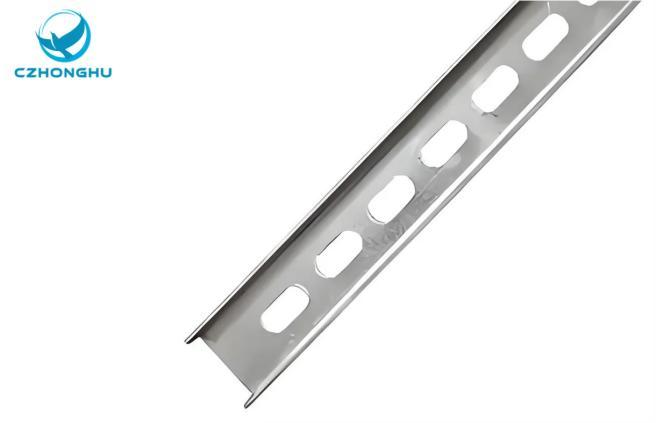
For standard outdoor projects with moderate environmental exposure, hot-dip galvanized strut channel usually offers the better balance of corrosion protection and project cost. For coastal, marine, chemical-processing, wastewater, food-processing, or other highly corrosive environments, stainless steel strut channel is generally the better long-term choice because corrosion resistance comes from the material itself rather than relying on a zinc coating.
The decision should therefore be based on exposure severity, required service life, maintenance accessibility, structural requirements, and total lifecycle cost—not purchase price alone. Eaton, for example, identifies both 304 and 316 stainless steel as options where increased corrosion resistance and cleanliness are required.
The main difference is the method of corrosion protection.
Galvanized strut is normally carbon steel protected with zinc. Pre-galvanized channel is economical and widely used, while hot-dip galvanizing provides heavier corrosion protection for outdoor applications.
A stainless steel strut channel, by comparison, is manufactured from corrosion-resistant stainless alloy rather than depending on a surface zinc layer. This becomes especially important when channels are exposed to moisture, aggressive chemicals, salt, or repeated cleaning.
| Factor | Stainless Steel Strut Channel | Galvanized Strut Channel |
| Corrosion resistance | Excellent | Good to very good |
| Outdoor use | Excellent | Very good, especially HDG |
| Marine environments | 316 stainless preferred | Limited in severe salt exposure |
| Chemical environments | Strong, grade-dependent | Less suitable for aggressive exposure |
| Initial cost | Higher | Lower |
| Maintenance requirement | Generally lower | May increase as zinc coating deteriorates |
| Typical service focus | Harsh environments | General commercial and industrial use |
It can eventually.
Galvanizing protects carbon steel through a zinc coating, which acts as a barrier and provides sacrificial corrosion protection. As the coating is consumed or damaged, however, the underlying steel can eventually become exposed to corrosion.
This does not make galvanized channel unsuitable outdoors. Hot-dip galvanized strut is a practical solution for rooftops, outdoor equipment supports, parking structures, and many moderately corrosive industrial locations.
Conditions change when salt spray, chlorides, industrial chemicals, or persistent moisture are present.
Usually, yes.
Chlorides from seawater, salt spray, and similar environments are major corrosion concerns for stainless steels as well, but suitable stainless grades provide substantially better resistance than conventional galvanized carbon steel in severe exposure.
For marine and chloride-rich locations, 316 stainless steel strut channel is generally preferred over 304. The Nickel Institute specifically identifies Type 316L as a more corrosion-resistant choice for marine environments and locations exposed to de-icing salts.
For project specifications, buyers should therefore distinguish between:
304 stainless steel for general corrosive environments
316 stainless steel for marine, coastal, chloride-rich, or more aggressive applications
Hot-dip galvanized steel for general outdoor environments where extreme corrosion resistance is unnecessary
Not automatically.
Load capacity depends on the channel profile, material grade, thickness, slot configuration, span, support spacing, and loading condition. Material finish alone should never be used to determine structural capacity.
Always compare manufacturer load tables for the exact channel size being specified.
The larger difference is often lifecycle performance.
Galvanized strut normally has a lower purchase cost, making it attractive for large commercial and industrial projects. Stainless steel requires a higher initial investment but can reduce corrosion-related inspection, recoating, replacement, and downtime in demanding environments.
This means the cheapest channel at procurement may not produce the lowest total installed cost over the life of the facility. Stainless steel is commonly selected where extended service life and reduced corrosion maintenance justify its premium.
For normal outdoor installations, hot-dip galvanized channel is usually sufficient and provides strong cost-performance.
Choose stainless steel strut channel when the support system will operate in environments such as:
Coastal or offshore facilities
Chemical processing plants
Wastewater treatment facilities
Food and beverage production
Pharmaceutical facilities
High-humidity processing areas
Locations exposed to salt spray or aggressive cleaning chemicals
Choose hot-dip galvanized strut channel for:
Rooftop supports
General outdoor construction
Warehouses and factories
HVAC and electrical support systems
Parking structures
Moderately corrosive industrial environments
For indoor dry locations, pre-galvanized channel can often provide an economical solution. Eaton notes that pre-galvanized steel is commonly used because of its cost effectiveness, while stainless grades provide increased corrosion resistance for more demanding applications.
The accessories matter as well. Channel nuts, brackets, bolts, clamps, and fasteners should have corrosion performance compatible with the selected strut. Installing stainless channel with unsuitable hardware can compromise the durability expected from the support system.
Yes. Hot-dip galvanized strut channel is commonly selected for outdoor applications because its zinc coating provides significantly better corrosion protection than untreated carbon steel. The suitability still depends on humidity, pollution, salt exposure, and required service life.
Stainless steel is highly corrosion resistant, but it is not completely immune to corrosion. Grade selection and environmental conditions remain important, particularly where chlorides or aggressive chemicals are present.
304 stainless steel works well for many industrial environments. 316 stainless steel is generally the better choice where chloride exposure, salt spray, marine conditions, or more aggressive corrosion is expected.
In severe environments, often yes. The higher material cost can be offset by longer service life, fewer replacements, reduced maintenance, and lower risk of corrosion-related support failures.
Use galvanized strut channel when cost efficiency and moderate corrosion resistance are the main priorities. Specify stainless steel strut channel when long-term corrosion resistance, hygiene, reduced maintenance, or harsh environmental exposure is more important than initial purchase price.
For accurate sourcing, provide the required channel size, thickness, slot pattern, stainless grade or galvanized finish, load requirement, installation environment, accessories, and quantity. These details allow the manufacturer to recommend a support system that meets both performance and budget requirements.
 English
 português
 Deutsch
 Nederland
 Español
 Polska